GU10 Bulbs: The Complete Buying Guide
Posted by Liam Terry on 5th Jun 2026
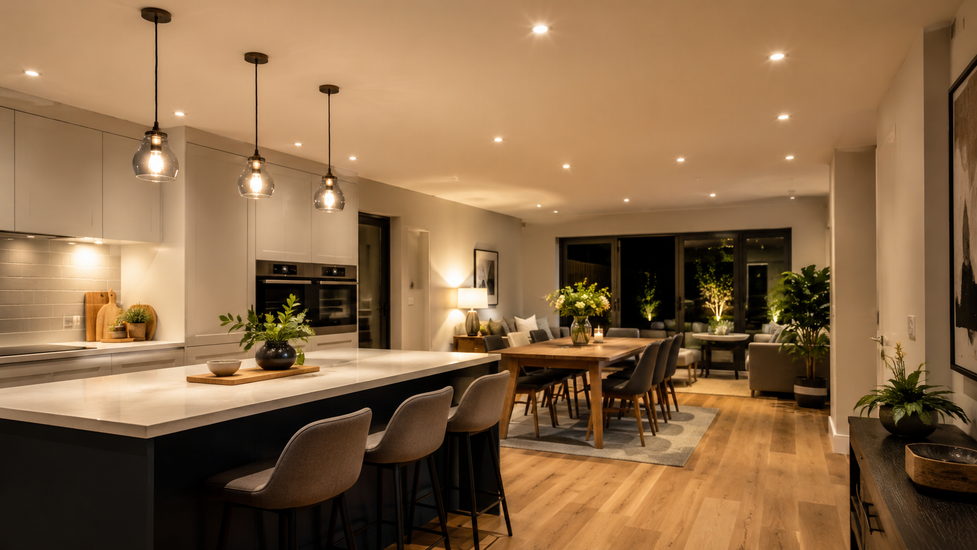
If you have downlights, track lighting or spotlights in your home or commercial space, there is a good chance they use GU10 bulbs. GU10 is one of the most common spotlight cap types in the UK, and choosing the wrong one — the wrong wattage, the wrong colour temperature, or a non-dimmable bulb in a dimmer circuit — is an easy and costly mistake.
This guide covers everything you need to get it right: what GU10 actually means, how to choose the correct LED replacement for a halogen fitting, and the key specifications to check before you buy.
What Does GU10 Mean?
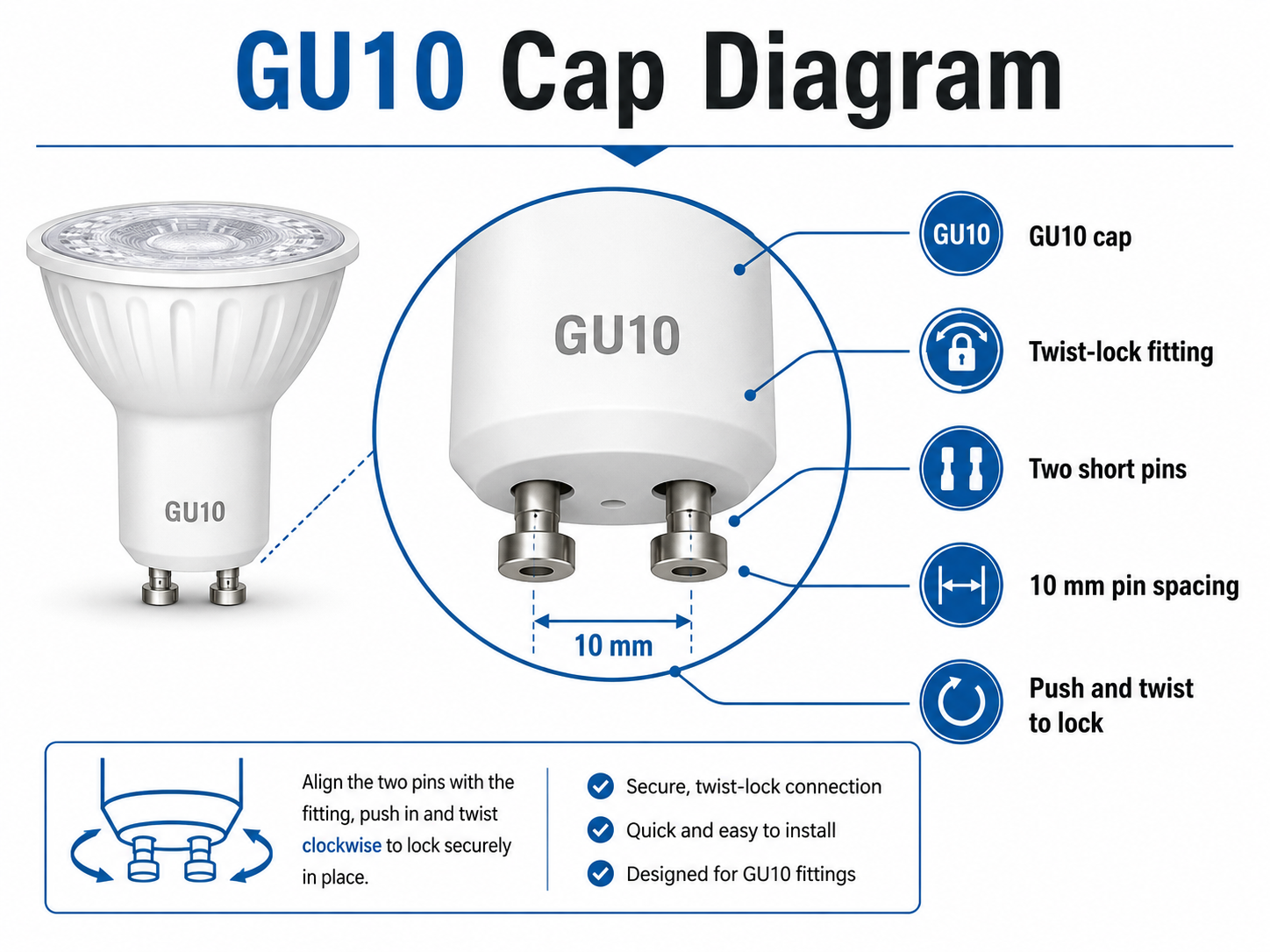
GU10 refers to the cap type at the base of the bulb — the part that connects to the fitting. The name breaks down like this:
- G — two pins
- U — the pins are U-shaped, meaning the bulb locks into the fitting with a short twist
- 10 — the pins are 10mm apart
GU10 is a push-and-twist, mains-voltage fitting. You insert the bulb, push in gently and twist a quarter-turn to lock it. To remove it, reverse the action.
GU10 runs on 240V mains voltage directly, which distinguishes it from MR16 spotlight bulbs, which typically require a 12V transformer. If your current spotlights use a separate driver or transformer box above the ceiling, they are likely MR16, not GU10.
LED GU10 vs Halogen GU10 — What's the Difference?
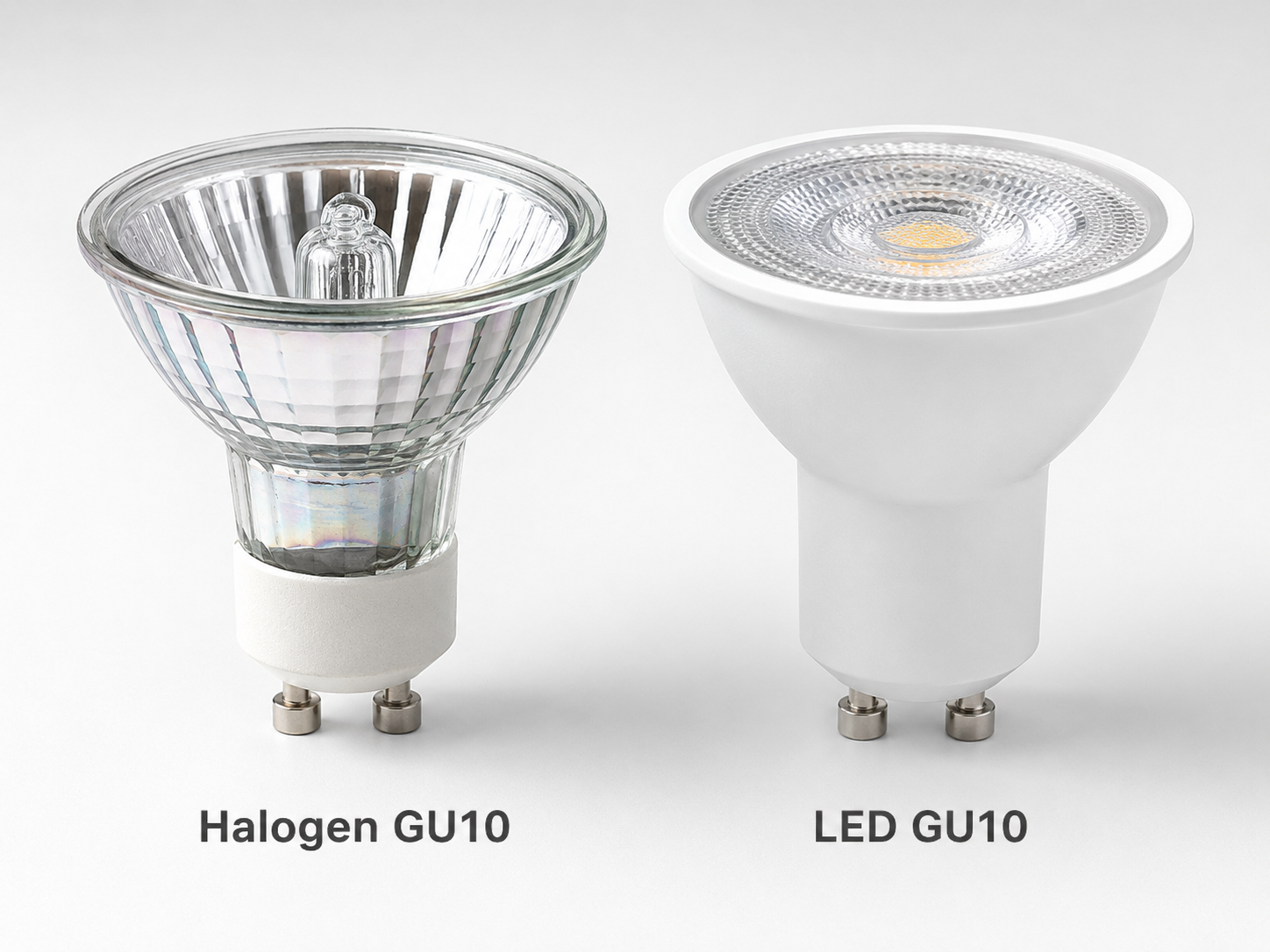
The GU10 cap is used in both halogen and LED bulbs, and they fit the same fittings. The difference is in what happens once the power is on.
| Halogen GU10 | LED GU10 | |
|---|---|---|
| Typical wattage | 35W–50W | 4W–7W |
| Light output (lumens) | 400–500 lm (50W) | 400–700 lm |
| Lifespan | ~2,000 hours | 15,000–25,000 hours |
| Energy saving vs halogen | Baseline | Up to 85% less |
| Heat output | High — hot to touch | Low |
| Dimmable options | Most are | Available — check spec |
| Colour temperature range | Warm (2700K–3000K) | 2700K to 6500K |
The energy saving is significant in practical terms. Ten 50W halogen GU10 downlights in a kitchen, running four hours a day, cost roughly £175 a year to run at current electricity prices. The same ten fittings with 5W LED GU10s cost around £17 a year — a saving of over £150 annually from one room alone.
LED GU10s also last considerably longer. A halogen GU10 running four hours a day will typically need replacing within 18 months. A quality LED GU10 at the same usage will last 10 to 17 years before it needs replacing.
Browse our full range of LED GU10 bulbs
How to Choose the Right GU10 Bulb
Lumens, Not Watts
When replacing a halogen GU10 with LED, ignore the wattage and focus on lumens. Lumens measure the actual light output. A 50W halogen GU10 produces around 400–500 lumens. A good 5W or 7W LED GU10 produces the same or more.
As a general guide for downlights:
- Accent lighting or decorative use: 200–350 lm
- General room lighting: 400–600 lm per downlight
- Kitchen worktop or task lighting: 600+ lm
Colour Temperature
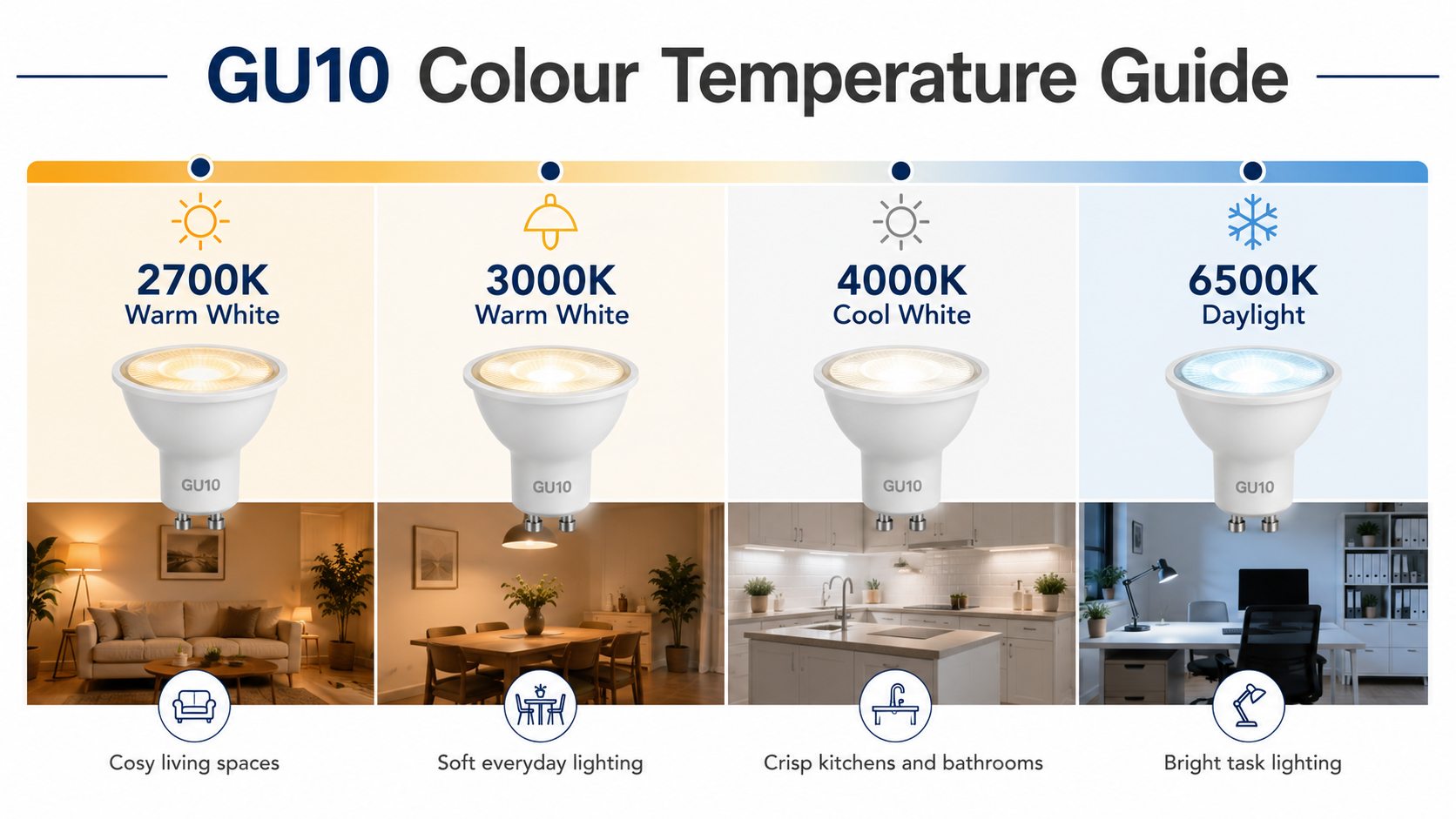
Colour temperature is measured in Kelvin (K). The higher the number, the cooler and whiter the light.
| Kelvin | Appearance | Best for |
|---|---|---|
| 2700K | Warm white — soft, golden | Living rooms, bedrooms, restaurants |
| 3000K | Warm white — slightly crisper | Kitchens, hallways, bathrooms |
| 4000K | Cool white — clean, neutral | Offices, commercial spaces, bathrooms |
| 6500K | Daylight — blue-white | Garages, workshops, display lighting |
The most common choice for domestic downlights is 2700K or 3000K. If you want the clean, bright finish common in modern kitchens and bathrooms, 4000K is the better choice.
Mixing colour temperatures in the same room — for example, 2700K ceiling downlights alongside a 4000K lamp over a worktop — will look inconsistent. Keep all fittings in the same room at the same Kelvin value.
Dimmability
Not all LED GU10s are dimmable, and using a non-dimmable LED bulb on a dimmer circuit will cause problems: flickering, buzzing, a reduced lifespan, or the bulb simply failing to work.
If your fittings are connected to a dimmer switch, buy LED GU10s explicitly marked as dimmable. You should also check that your dimmer switch is compatible with LED loads. Older TRIAC dimmers designed for halogen bulbs may not perform well with LEDs, even dimmable ones. An LED-compatible trailing-edge dimmer will give the best results.
If you are not sure whether your circuit has a dimmer, check the switch. A dimmer typically has a rotating knob, a slider, or a push-and-rotate mechanism rather than a standard rocker.
Beam Angle
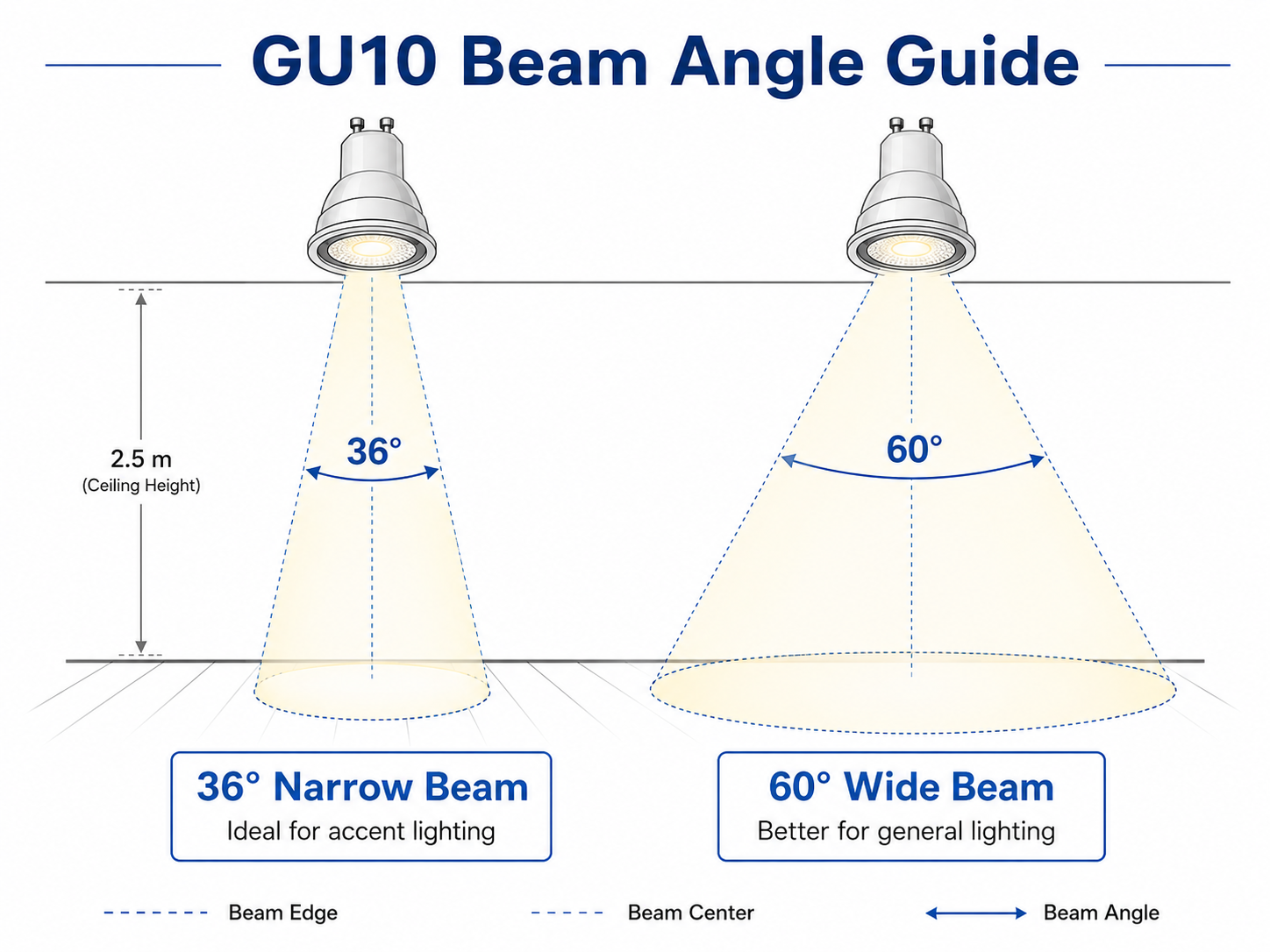
GU10 spotlights are directional — they throw light in a cone. The width of that cone is the beam angle.
| Beam angle | Effect | Best for |
|---|---|---|
| 25°–36° | Narrow spot | Accent lighting, artwork, display shelving |
| 60° | Medium flood | General downlighting in rooms |
| 90°–120° | Wide flood | Broad area illumination, low ceilings |
Most domestic downlights perform well with a 36° to 60° beam angle. Very narrow spots (25°) are best for directing light at a specific object, not for lighting a room generally. If your ceiling is low — below 2.4m — a wider beam angle will spread light more evenly and avoid harsh pools of light on the floor.
What Wattage LED GU10 Replaces a Halogen?
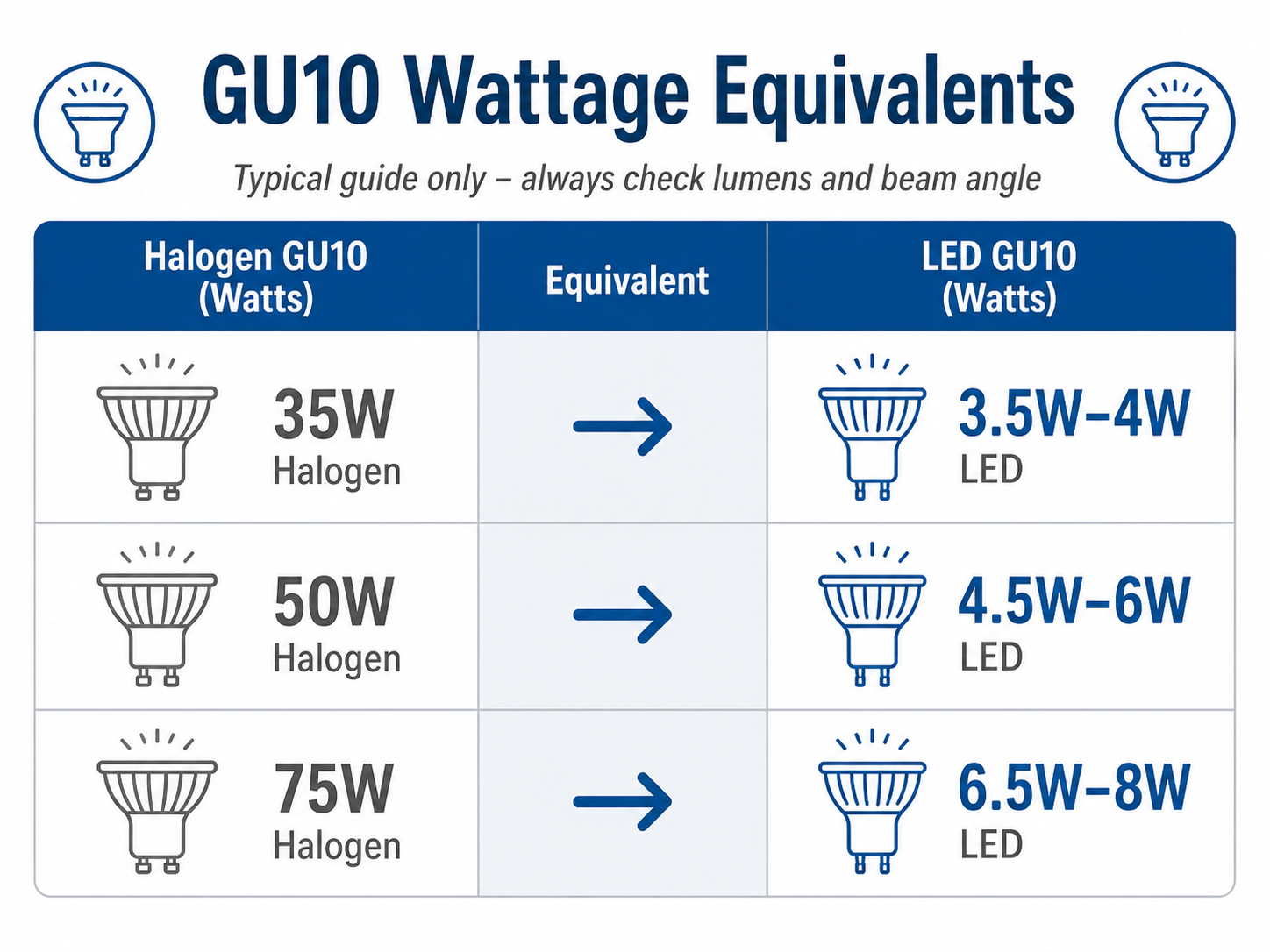
Use this table as a starting point when replacing halogen GU10 bulbs with LED. The key comparison is lumens — not watts.
| Halogen GU10 | Approximate lumens | Recommended LED GU10 |
|---|---|---|
| 20W | 170–200 lm | 3W LED |
| 35W | 300–350 lm | 4W–5W LED |
| 50W | 400–500 lm | 5W–7W LED |
Check the lumens figure on both the halogen you are replacing and the LED you are buying. The wattage of the LED tells you about running cost — not brightness.
Do GU10 Bulbs Work in All Downlight Fittings?
GU10 bulbs will physically fit any GU10 fitting — the cap type is standardised. However, there are a few practical points to check before buying.
Fitting Depth
Some recessed downlights have a shallow recess that may not accommodate longer LED GU10 bulbs. Check the overall length (OAL) of the LED GU10 against the depth of your fitting before buying. This is rarely a problem with modern LED GU10s, which tend to be compact, but worth confirming if you have older or unusually shallow fittings.
Fire-Rated Downlights
Many recessed ceiling downlights are fire-rated, meaning the fitting provides a fire barrier between floors or between the ceiling and roof space. Switching from halogen to LED GU10 does not affect the fire rating — that is a function of the fitting, not the bulb. You can replace a halogen GU10 with an LED GU10 in a fire-rated fitting without compromising it.
Bathroom Fittings
GU10 fittings in bathrooms must comply with IP rating requirements depending on their position relative to water sources. This is about the fitting, not the bulb — most GU10 bulbs do not carry their own IP rating. Ensure the fitting is appropriately rated (IP44 for zone 2, IP65 for zone 1 directly above a bath or shower) before installing any GU10 bulb in a bathroom.
Enclosed Fittings
A small number of GU10 fittings are fully enclosed, trapping heat around the bulb. Some LED GU10s are not rated for enclosed fittings and will fail prematurely in these conditions. Check the product datasheet if you are fitting into a glass globe or any enclosed housing.
Common Mistakes When Buying GU10 Bulbs
Buying on watts instead of lumens. A 7W LED and a 50W halogen are not directly equivalent by wattage — they are equivalent by lumens. Always compare brightness figures, not power consumption.
Wrong colour temperature. 4000K in a bedroom will feel clinical and harsh. 2700K over a kitchen worktop where you need clear task lighting may feel too dim and yellow. Choose colour temperature for the purpose of the room.
Buying non-dimmable for a dimmer circuit. This is the most common cause of LED GU10 flickering and early failure. Always check the product spec, and confirm your dimmer switch is LED-compatible before purchasing.
Ignoring beam angle. Replacing a 60° halogen with a 25° narrow-spot LED will leave the room feeling dark and patchy even if the lumens figures are similar. Match the beam angle to the original bulb and the room layout.
Buying different batches. Colour temperature can vary slightly between manufacturing batches. If you are fitting ten downlights in a room, buy all ten at the same time from the same product line to ensure a consistent result.
FAQs
Are all GU10 bulbs the same size?
The cap and pin dimensions are standardised, so all GU10 bulbs will fit all GU10 fittings mechanically. However, the overall length of the bulb can vary between products. Check the dimensions if your fitting has a shallow recess.
Can I use an LED GU10 directly in a halogen fitting?
Yes. LED GU10 bulbs are a direct replacement for halogen GU10 bulbs. The cap is identical, the voltage is the same (240V), and no adaptor or transformer is required. Simply twist out the old halogen and twist in the LED.
Why is my GU10 LED flickering?
The most likely cause is an incompatible dimmer switch. LED GU10s require a dimmer rated for LED loads. Older dimmers designed for halogen bulbs often have a minimum load threshold that LEDs do not meet. Replacing the dimmer switch with an LED-compatible model usually resolves the issue. Also confirm that the LED GU10 itself is rated as dimmable.
What colour temperature is best for a kitchen?
3000K to 4000K. 3000K gives a warm but bright finish suited to cooking and food preparation. 4000K is crisper and suits contemporary kitchens with a clean, modern aesthetic. Avoid 2700K if clear task lighting over worktops is a priority.
How many lumens do I need for a downlight?
For general room lighting, aim for 400–600 lumens per downlight. The total number of downlights needed depends on room size, ceiling height and beam angle. A common spacing guide is to space downlights at roughly the same distance apart as the ceiling height — for example, a 2.4m ceiling suggests downlights every 2.4m, offset from walls by approximately half that distance.
Can I mix warm white and cool white GU10s in the same room?
Technically yes, but it will look inconsistent. Different colour temperatures in the same space create an uneven, often unflattering result. Use one consistent colour temperature throughout a room.
Conclusion
GU10 is one of the simplest bulb types to get right once you know the key variables: lumens over watts, colour temperature matched to the room, dimmable where the circuit requires it, and beam angle suited to how the light will be used.
For most domestic downlights, a 5W–7W LED GU10 in 2700K or 3000K at a 36°–60° beam angle is the right starting point. For kitchens, bathrooms and commercial spaces, 4000K is typically the better choice.
Browse our full range of LED GU10 bulbs — or if you need help choosing, contact our team and we will point you in the right direction.