-
Dencon
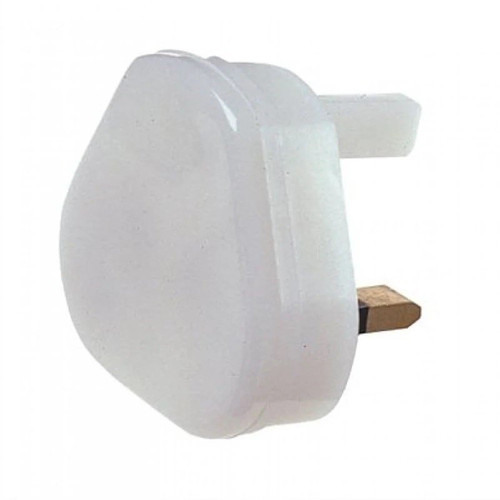
Dencon 1600 Nightlight LED Plug In Glow Light PlugSpecifications: Technology: LED Bulb Type: Nightlight Voltage: 240V Dimensions: 45mm (Height) × 50mm (Width) × 50mm (Diameter) Lifespan: 30,000 hours Colour: White Dencon 1600 Nightlight LED Plug...£2.70 (Inc. VAT)£2.25 (Ex. VAT) -

Integral LED
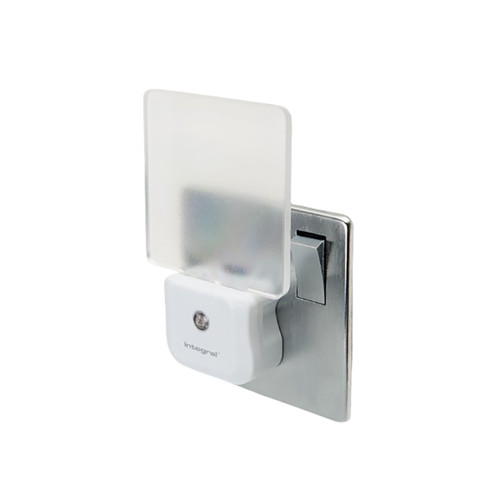
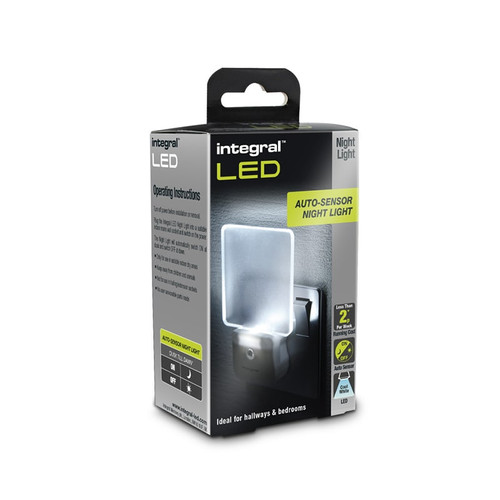
Integral Auto Sensor LED Night Light ILNL-CL-UK - Cool White, 3-Pin UK Plug, Dusk to DawnSpecifications: 0.6w UK-3 pin 20mA Cool White LED Nightlight Night Sensor 220-240V 50/60Hz 117 x 76 x 47.30mm Integral Auto Sensor LED Night Light ILNL-CL-UK£5.04 (Inc. VAT)£4.20 (Ex. VAT) -
Integral LED
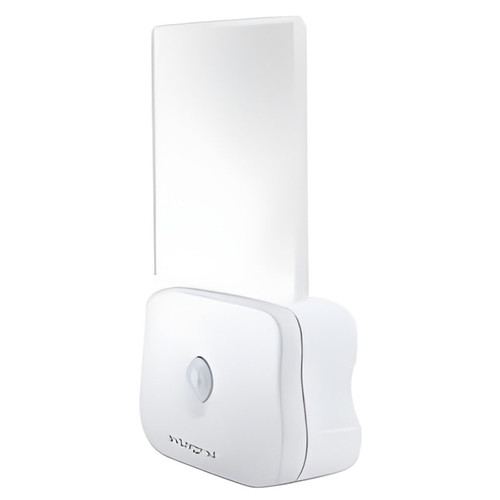
Integral Motion Sensor LED Night Light Cool White – Battery Powered ILNLMS-CL-BATSpecifications: 0.5w Battery 25mA Cool White LED Nightlight Night and Motion Sensor - Battery Powered 220-240V 50/60Hz 119 x 72 x 51mm Integral Motion Sensor LED Night Light Cool White – Bat£7.44 (Inc. VAT)£6.20 (Ex. VAT) -


Dencon
Dencon 1610 Moonlight Low Energy NightlightThe Dencon Moonlight nightlight has a restful diffused blue/ green light. This nightlight uses1/2p per week to run if used continuously for 24 hours a day. No bulb to change Slim elegant design. Use...£15.00 (Inc. VAT)£12.50 (Ex. VAT) -

Ledvance
LEDVANCE Children's Nightlight Nightlux Rabbit Colour Change RGBNIGHTLUX TOUCH RGBW | RGBW Nightlight with Touch Dim function Battery powered Rechargeable Perfect for Children's bedrooms For indoor use only Nightlight Battery rechargeable via USB cable RGB colour...£18.00 (Inc. VAT)£15.00 (Ex. VAT)

Night Lights
About Night Lights
A sensor night light handles itself. Dusk to dawn models read the room and switch on when it goes dark, staying lit until morning. Motion sensor models stay off until somebody moves past, then light the way for a few seconds and go out again. Neither needs a switch found in the dark.
We stock plug in and battery powered night lights from Dencon, Integral and LEDVANCE, drawing as little as 0.5W. The cool white sensor units suit stairs, landings, hallways and garages, where the point is seeing a step clearly and getting through safely. Where a socket is awkward or absent, battery models go wherever they are needed. For a bedroom or nursery, the dimmable colour changing model is the one to pick.
Frequently Asked Questions
Two sensors working together. A light sensor keeps the unit asleep while the room is bright, so it never triggers in daylight and wastes nothing. A passive infrared sensor then watches for the heat signature of a person moving across it. Both have to agree, which is why a motion sensor night light stays dark all day even in a busy hallway.
Typically somewhere between fifteen and sixty seconds, and the timer restarts each time it sees movement again. That is enough to cross a landing or climb a flight of stairs without it going out halfway. If you want light that stays on all night rather than in bursts, a dusk to dawn unit is the right choice instead.
They are one of the most common reasons people buy them. Night-time trips to the bathroom are when falls happen, and the risk is worst in the moment between waking and finding a switch. A sensor unit removes that moment entirely: the light is already on before the first step. Because it needs no operating, it also suits someone who would not reliably use a switch or a lamp.
Low and at the bottom, in a socket on the hall wall near the foot of the stairs, so the light rakes across the treads and picks out the edge of each step. Mounted high it lights the wall and leaves the treads flat and hard to read. If there is a turn or a half landing, a second unit there is worth more than a brighter one at the bottom.
Often, yes. A passive infrared sensor responds to a moving heat source, and a cat or a dog qualifies. Mounted at socket height a pet passes straight through the detection zone. It is rarely a problem, since the light draws a fraction of a watt and switches off again in under a minute, but it is worth knowing if the unit is somewhere you would notice it flicking on.
A garage or an internal utility space is straightforward if there is a socket. A shed or a bathroom is different: these are indoor rated units with no weather or moisture protection, and a bathroom has its own wiring rules. In both cases a battery powered sensor model is the sensible answer, because it needs no socket and no fixed connection.
Cool white, for a route you are walking rather than a room you are sleeping in. It renders edges and changes in level more clearly, which is the whole job on a stair or a landing. Warm and dim belongs inside a bedroom, where the priority is not disturbing sleep. Getting these the wrong way round is the usual mistake: a warm glow on a staircase looks pleasant and shows you very little.
A plug in unit goes off with everything else, which is exactly when you would want it. A battery powered sensor model keeps working, and that is a reasonable argument for having at least one battery unit on the stairs even in a house where every socket is available. It is not an emergency light and is not a substitute for one, but it will show you the steps.
Take the 0.6W dusk to dawn unit. Twelve hours a night for a year is about 2.6 kWh, which at 27p a unit comes to roughly 71p. Left on permanently, twenty four hours a day for the whole year, it still comes to under a pound and a half. A motion sensor model costs less again, because it is only lit for a few seconds at a time.
It depends on the body size, and it is worth checking before you buy. The units here run from about 45mm to 120mm across, so in most standard double outlets the second socket stays usable, though a wide unit can foul a bulky plug next to it. Where the socket is genuinely tight, a battery model sidesteps the question.